Advancing Customer Sustainability
Helping customers to decarbonise their industrial thermal energy use
.ashx?rev=f583f2acfa7448e29b39a7023fa32dc7&hash=401D25E77369DE5C36321072B5E08043)
Our third area of focus reflects the wider impact we can have through what we do for our customers, helping them improve efficiency and their sustainability performance. Across all three Businesses we are advancing customer sustainability by embedding sustainability into how we design products, services and packaging, helping customers extend product life and reduce waste.
We are also increasing products and services with clear sustainability benefits and strengthening responsible supply chains.
This supports our ambition to lead in industrial decarbonisation through our suite of solutions that has the potential to address more than 5% of global carbon emissions.
Alignment with UN SDGs
Prioritising and measuring progress and impact, with a clear set of defined targets
This focus area is underpinned by four defined targets that enable us to prioritise our efforts and measure our progress and impact, these are:
| Target | Why this is important | Our progress to date |
|---|---|---|
Embedding sustainable products:by understanding our customers’ sustainability goals, we aim to extend product life and reduce waste through piloting circular products or services and including eco‑design into new product development. |
Embedding sustainability into our products reduces their impact across the lifecycle. It anticipates future regulation changes and differentiates our offer through customer solutions that deliver lower cost, reduced waste and carbon, while also improving performance. |
27Life Cycle Assessments completed since 2021 |
Sustainable packaging:by applying lifecycle thinking to packaging design, we aim to reduce environmental impact and drive operational efficiency. |
Improving packaging is highly visible to customers and regulators. Improving our packaging reduces material use and waste and supports recyclability, as well as compliance, across our operations and customer value chains. |
98%reduction in plastic packaging from three core packaging types in STS |
Increasing revenues from sustainable solutions:by increasing revenues from products and services that deliver clear sustainability benefits for customers, we aim to support our own growth, our customers’ sustainability journeys and have a positive impact on the planet. |
Growing revenue from sustainable solutions links sustainability to commercial value. It accelerates customer impact at scale which supports our growth as demand for lower-carbon and resource-efficient products and services increases. |
14.8mtonnes of CO2 saved annually by customers purchasing products sold in 2025 |
Responsible supply chains:by completing deep-dive risk assessments across high‑risk commodities, geographies and suppliers, we aim to strengthen supply chain due diligence and deliver targeted mitigation actions. |
Strengthening our supply chains helps us to manage risk, reduce disruption and meet customer and regulatory expectations, while improving outcomes that protect people and nature across the geographies where we operate. |
96%of direct material suppliers have signed the Supplier Sustainability Code |
Embedding sustainability into how we design products, services and packaging
By focusing on eco-design, better understanding the whole lifecycle impacts of our products through Life Cycle Assessments (LCAs) and transitioning to more sustainable packaging, we aim to reduce our environmental footprint and support our customers and suppliers in their sustainability efforts too.
Eco-design
We are building on the work we began in 2024, to develop an eco-design toolkit, supported by a third-party specialist. The toolkit includes evaluation tools and data that facilitate decision making and support consideration of environmental impacts throughout the product lifecycle.
The toolkit sets out a four-step process, in an iterative cycle, that includes:
1.
|
2.
|
3.
|
4.
|
In addition to developing the toolkit, we have been delivering training to support our engineering colleagues in each Business to apply the toolkit effectively.
Product responsibility
We design and produce products that are safe, reliable and fit for purpose.
A combination of extensive analysis, test and validation procedures during product development and a rigorous attention to detail during manufacture, ensure that our products are of the highest quality and will meet their, often tough, application requirements.
We are working towards applying eco-design principles during product development to ensure that our products are safe to use, contain ethically sourced materials, avoid hazardous substances and are environmentally sound throughout their lifecycle.
Packaging
Although we didn’t meet the stretching 2025 target we set for eliminating single-use and non-recyclable packaging from our operations, we are still making progress:
- In 2025, we focused on three priority packaging types and made progress across all Businesses
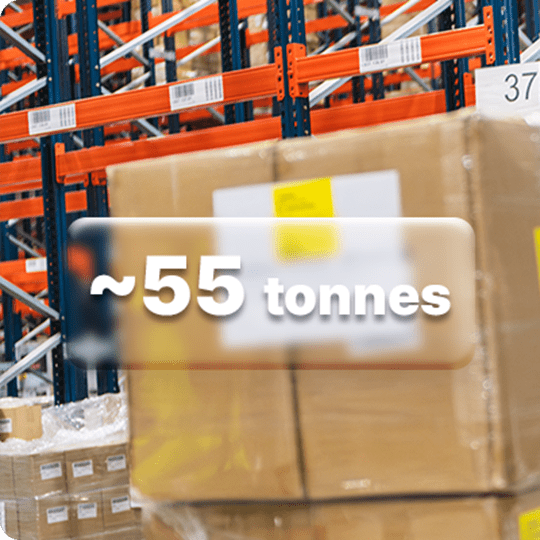
- In STS, we implemented alternatives to plastic tape, plastic label holders and foam-in-place packaging, eliminating 98% of these items (by weight) by the end of 2025 without compromising our customer’s experience, removing an estimated 55 tonnes of plastic packaging
Reducing our environmental impact
-
of plastic packing removed from STS operations by the end of 2025
-
WMFTS manufacturing sites have transitioned away from plastic tape and document wallets, and four of five sites previously using foam-in-place packaging have now moved to more sustainable alternatives
-
use* of plastic packaging at ETS Chromalox in Germany
*unless requested by customers
Customer environment benefits
The products that we make and sell are helping our customers to be more sustainable. During 2025, the annual estimated customer CO2, energy and water savings from a select range of 16 product categories sold, were equivalent to:
-
mature trees absorbing CO2
-
people's annual average energy consumption in the UK
-
Olympic-sized swimming pools of water
.ashx?w=540&rev=971e60f88ef34848addf14bb95cecb1b&hash=29D86F352D97A1ABC061DCDDEB3AF818)
.ashx?w=540&rev=c85dcb6999394f24ad23f282dfc3728c&hash=D33A199D66EDC7805BBC3D4FBF0BB1C7)
.ashx?w=540&rev=2bb1ec941be643beb2969b7f54ece0b1&hash=6A7E6FFF69817B272B1C5BE3F4C9D690)
The methodology used to calculate customer energy, carbon and water savings above has been independently verified by a specialist consultancy, Ricardo Energy & Environment. Only products with savings that can be quantified with a reasonable degree of certainty are included within the scope of this methodology.
Increased revenues from customer sustainability
.ashx?rev=ebed42f46ba74e1bb1a937bc61fcf415&hash=E76266163A05BDC36A787DE343356F8C) Helping customers decarbonise industrial thermal energy
Helping customers decarbonise industrial thermal energy
Industrial decarbonisation is critical to achieving net zero. At Spirax Group, we help customers improve efficiency and reduce emissions in thermal energy-intensive processes through our combined steam and electric expertise.
Our solutions have the potential to address more than 5% of global carbon emissions and represent a significant long-term growth opportunity for the Group, with an additional annual addressable market of ~£7 billion, contributing to the total addressable market of ~£18 billion.
We are investing in our decarbonisation capabilities to help customers optimise, manage and decarbonise their production processes, supported by four go-to-market strategies, as detailed below:
1. Energy optimisation across steam and electric thermal systems
Our STS sales engineers identify and solve inefficiencies in steam and condensate loops, while ETS sales engineers do the same for electric thermal energy systems. Together, these capabilities are a core part of our customer value proposition and a key differentiator in our decarbonisation offer.
In 2025, we increased the number of STS quotes that included sustainability benefits by more than 50%, creating additional site audit opportunities and product revenues.
As part of the reorganisation of the STS EMEA sales function, we also established Sustainability Centres of Excellence to complement the market and customer knowledge of our sector specialist sales engineers. This model is already delivering results: STS was appointed preferred supplier for Steam System Audits for a global Food & Beverage customer across 20 sites, with potential revenues worth ten times the value of the audits.
2. Decarbonising steam generation at scale
Through TargetZero, we are helping customers reduce emissions from steam generation using a combination of steam and electric thermal energy expertise.
Our solutions such as SteamVolt, Electrofit, Steam Battery and High-Temperature Heat Pumps are designed to support the shift away from fossil fuel-based steam systems and capture a potential annual addressable market of approximately £2 billion.
We have already reached agreement with several global industrial boiler OEMs to integrate our SteamVolt technology into their electric boilers. Our first pilot solution has been installed at a Food & Beverage facility, with a second now installed at a Chemical plant. We are also continuing to test and refine Electrofit with a global Food & Beverage customer across two production sites.
We have also made progress in the commercialisation of High Temperature Heat Pump technology for the generation of steam utilising waste process heat.
3. Electrifying industrial process heating
Through PoweringZero, we help customers replace fossil fuel-based heating in critical industrial processes with electric thermal solutions.
In Process Heating (ETS), we have a leading competitive position in delivering customised Low Voltage (LV), and increasingly, Medium Voltage (MV) electric resistance heating solutions into our customers’ critical processes. Supporting applications across sectors including Food & Beverage, Construction, Pulp & Paper and newer areas such as energy storage.
Together, these solutions represent a potential annual addressable market of approximately £5 billion. In 2025, we secured contracts to design and supply medium-voltage heaters for:
- a power generation customer’s first renewable energy storage facility in the UK
- a chemical customer to support emissions reduction
- a European paper manufacturing OEM for lower-carbon tissue drying solutions. Read more how ETS is embedding decarbonisation solutions below.
4. Integrated Thermal Energy Assessment
We help customers take a more joined-up view of their thermal energy use by combining steam and electric expertise in a single assessment. This helps identify opportunities to improve efficiency, reduce emissions and build clear decarbonisation pathways.
We recently piloted this approach with Food & Beverage customers. For one leading global drinks brand, a combined ETS, STS and cross-functional team identified opportunities for system optimisation, maintenance savings and electrification across four high-energy sites. You can read more how we are identifying tangible thermal energy savings for a global drinks brand.

From energy intensive to energy efficient...
…how ETS is embedding decarbonisation solutions into OEM design.
Learn more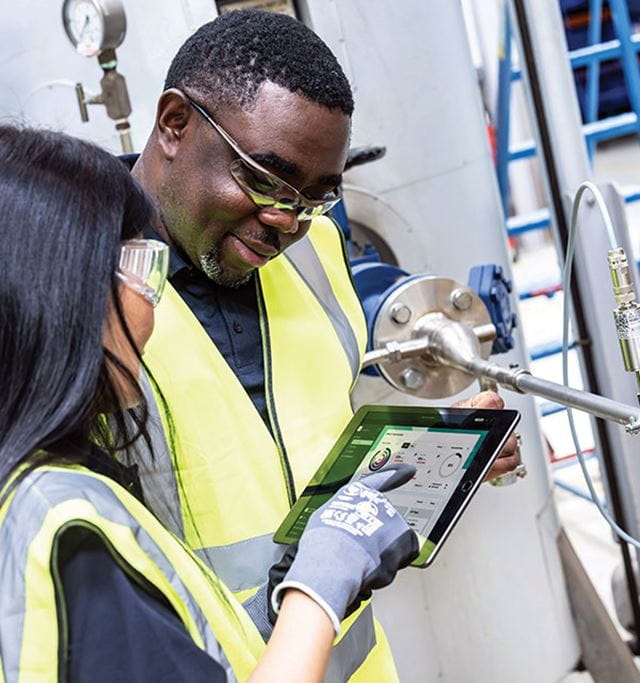
From assessment to impact…
…how we are identifying tangible thermal energy savings for a global drinks brand.
Learn moreResponsible supply chains
Our Supplier Sustainability Portal is designed to engage our strategic and higher risk suppliers in a range of environmental, social, governance (ESG) and product compliance topics.
We remain focused on engaging suppliers, using the data gathered to evaluate supplier sustainability performance and verifying evidence to ensure compliance with our minimum standards. We have established minimum compliance thresholds for key areas, including labour rights, human trafficking and slavery, human rights and organisational commitment, which, over time, we would expect all suppliers to be able to demonstrate they meet.
-
Supplier Sustainability Code
Our Supplier Sustainability Code defines the minimum standards expected of suppliers and their sub-tier suppliers when conducting business with the Group. It sets out requirements relating to human rights, health and safety, quality management, environmental sustainability and ethical business practices.
Working together, we can progress in our ambition to implement the highest possible standards in industrial sustainability.
-
Supply Chain Risk Assessment
In 2025, we commissioned a Group-wide supply chain risk assessment to enhance our understanding of key risks across our global supplier base. This assessment analysed risks by geography, Business and commodity category, focusing on critical areas such as environmental impacts, human rights and the use of Conflict Minerals. The insights gained will enable us to more effectively identify risk hotspots and prioritise areas for action, strengthening our ability to manage sustainability risks across a complex and evolving supply chain landscape.
-
Conflict Minerals
We continue to manage Conflict Mineral risks through analysing the data collected in our Portal and through our corrective action plan which is aligned to the Organisation for Economic Co-operation and Development (OECD) Due Diligence Guidance. We engage with suppliers where there is insufficient clarity of sourcing and processing of listed Conflict Minerals in our supply chains. We have also delivered training sessions for colleagues on the importance of managing Conflict Mineral risks.
Explore More

Sustainability

Embedding Sustainable Operations
Engaging People and Communities